


Selling a home involves one important decision, before the property even reaches the market: determining the right asking price. Set the price too high, and potential buyers may overlook the listing. Price it too low, and you could miss an opportunity to maximize your property’s value.
Today artificial intelligence (AI) is making this decision easier, by helping homeowners estimate property values in minutes. Online valuation tools can analyze property details, historical sales, market trends and other available data, to generate an estimated price. What once required extensive research can now begin with a few clicks.
However, an automated estimate is not the same as a professional property valuation. AI can process large amounts of data; but it may not fully understand the condition of your home, the appeal of your neighborhood or the reasons that a buyer might pay more for a particular property.
So can AI help you price your home accurately? The answer depends on how you use it. Understanding the difference between automated home valuations and local real estate expertise can help you make a more informed pricing decision.
What Is an AI Powered Home Valuation?
An AI powered home valuation is an estimate of a property’s potential market value, generated using algorithms, statistical models and available real estate data.
Many online valuation systems use techniques associated with automated valuation models (AVMs). Depending on the tool, these models may consider information such as:
- Property characteristics: Location, square footage, number of bedrooms and bathrooms, lot size and property type
- Comparable property sales: Recent sale prices of homes with similar characteristics in the surrounding area
- Market trends: Changes in property prices, local demand, inventory and selling activity
- Historical records: Previous transactions and available property records
- Additional data: Tax assessments, listing information and other relevant sources, depending on the platform
Using these inputs, an automated model estimates what a property might be worth under current market conditions.
For example, if several homes with similar layouts and sizes have recently sold in your neighborhood, an AI valuation tool may use those transactions to estimate the value of your home.
The process is fast and convenient, making it a useful starting point for homeowners who want to understand their property’s approximate market position before speaking with a local real estate expert.
However, an estimate is only as reliable as the data and assumptions behind it. If property records are incomplete, comparable sales are outdated or important features are missing, the result may not accurately reflect what buyers would pay.
How Does AI Estimate Your Home’s Value?
AI valuation tools typically combine property data with statistical analysis, to identify patterns in real estate transactions. Although each platform uses its own methodology, the general process follows a few key steps.

1. Collecting property data: The system gathers available details about the property, including its location, size, layout, age and recorded features. Some platforms also incorporate listing histories and other market information.

2. Comparing similar properties: The model identifies comparable properties (often called “comps”) and analyzes their recorded sale prices. Similarity in location, size, property type and other characteristics helps shape the estimate.
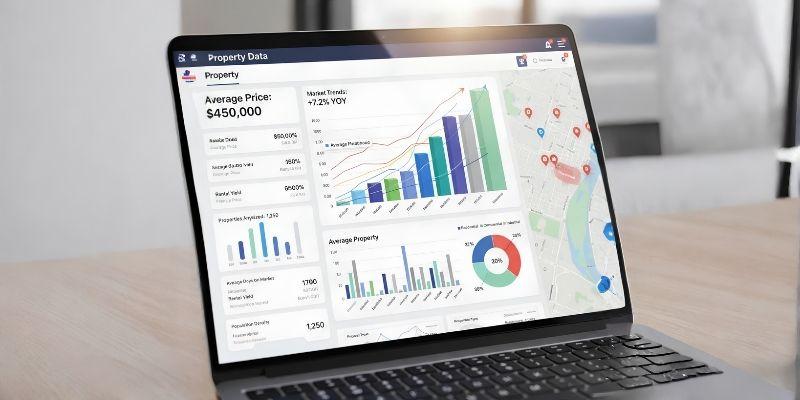
3. Analyzing market patterns: Statistical models evaluate relationships between property characteristics and sale prices. Depending on the system, they may also account for recent price movements and local supply and demand.
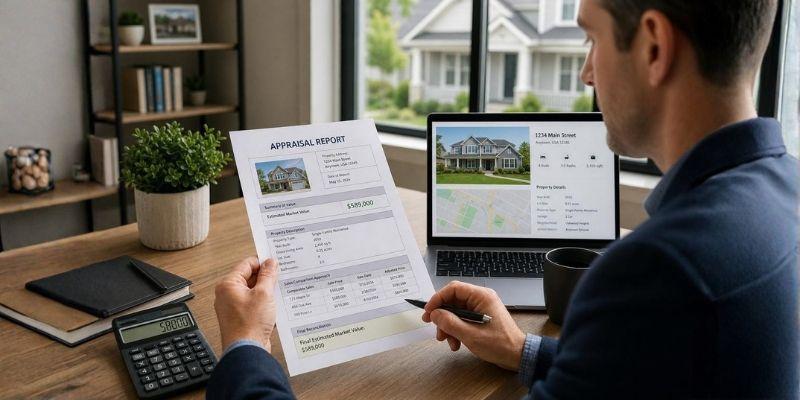
4. Generating an estimated value: The tool produces an estimated property value, sometimes with a confidence range or other indication of uncertainty. The result is a data-based estimate, not a guarantee of the final selling price.
Automated valuation models can be useful, when reliable sales data is available; however, estimates may become less dependable, when comparable transactions are scarce or the property’s recorded details are incomplete. Reviewing Dayton real estate market trends can provide additional context, when evaluating local housing conditions.
What Are the Advantages of Using AI to Price Your Home?
AI can make the early stages of home pricing faster and more data-driven. Here are some of its biggest advantages.
1. Faster property value estimates: Traditional property research can involve reviewing comparable sales, studying market conditions and evaluating different pricing scenarios. An online valuation tool can process available information and generate an estimate quickly.
This is particularly helpful for homeowners who are just beginning to consider selling and want an initial understanding of their property’s potential value.
2. Access to broader market data: Depending on the platform and the data available, AI can analyze numerous property transactions and identify pricing patterns that may be difficult to spot manually.
For instance, it may reveal how properties with similar square footage, bedroom counts or locations have performed in recent sales. This gives homeowners a useful starting point for understanding their local market.
3. A more objective starting point: Homeowners often attach personal value to their properties. Memories, renovation expenses and the time spent maintaining a home can influence what they believe it should sell for.
An automated valuation offers a separate data-based reference point. Although the estimate itself can be inaccurate, it can help homeowners question assumptions and begin a more objective pricing discussion. Research from the Federal Reserve has also examined how model-based estimates differ from homeowners’ own valuations.
4. Easier comparison of pricing scenarios: Some property platforms allow users to explore how different property characteristics or market conditions relate to estimated values. This can help homeowners understand why a similar property might command a different price.
The usefulness of these comparisons depends on the information that the tool provides and whether its underlying assumptions reflect the local market.
5. A useful starting point for pricing conversations: AI generated estimates can help homeowners prepare questions, before consulting a real estate agent or property appraiser.
Instead of beginning with no reference point, sellers can discuss why the estimate differs from recent sales, whether their improvements affect value and which comparable properties deserve closer examination.
The important distinction is that AI provides information to support a pricing decision. It does not automatically determine the best asking price. Jill Team can help you evaluate your home’s market position and develop a pricing strategy, based on local market conditions.
AI Valuation vs. Local Rewal Estate Expertise: What’s the Difference?
AI valuation tools and local real estate professionals serve different purposes. AI is particularly useful for processing data quickly, while an experienced local agent can interpret that information in the context of the property’s actual condition, the neighborhood and the seller’s goals.
| Factor | AI-powered valuation | Local real estate expertise |
|---|---|---|
| Speed | Generates estimates quickly | Requires research and property-specific assessment |
| Market data | Analyzes available records and statistical patterns | Reviews comparable sales, listings and local market conditions |
| Property condition | Depends on the accuracy of recorded information | Can assess visible condition and identify features that need further investigation |
| Neighborhood knowledge | Depends on available location data | Can interpret street level differences and local buyer preferences |
| Buyer behavior | Identifies patterns in available data | Can provide context from buyer feedback, showings and current competition |
| Pricing strategy | Provides an estimated value or range | Helps determine an appropriate asking price and adjustment strategy |
| Limitations | May miss unrecorded or unusual property features | Can have judgment affected by incomplete data, assumptions or bias |
Professional property valuation is not simply a matter of choosing a nearby sale and copying its price. Appraisers analyze comparable transactions, account for material differences and consider relevant market conditions. Real estate agents can complement that analysis with a marketing and pricing perspective.
The strongest approach is often to use AI as a starting point and local real estate expertise to verify and interpret the result. A local professional can help you evaluate comparable sales, understand neighborhood conditions and develop a pricing strategy that reflects the Dayton market.
When Should You Trust an AI Home Valuation?
An automated estimate can be a useful guide, but its reliability depends on the circumstances.
| Situation | How to use the estimate |
|---|---|
| You are casually exploring your home's value. | Use AI as an initial reference point. |
| Your neighborhood has many recent sales of similar homes. | The estimate may be more informative, provided the underlying data is accurate. |
| Your home has undergone major renovations. | Verify whether the model reflects the improvements. |
| Your property is unusual or located in a low transaction market. | Seek a more detailed local assessment. |
| You are preparing to list your home for sale. | Compare the estimate with recent closed sales and a local pricing analysis. |
| You need a valuation for lending, legal, tax or other formal purposes. | Check the applicable requirements and obtain a qualified appraisal or other required valuation when necessary. |
One important distinction: An online home estimate, a real estate agent’s comparative market analysis and a formal appraisal are not interchangeable. Each has a different purpose, methodology and level of detail.
For significant financial decisions, do not rely on an automated estimate alone. The U.S. Government Accountability Office has highlighted potential reliability and transparency limitations in automated valuation models, particularly when comparable data is limited.
Conclusion
AI Can Estimate Your Home’s Value, but Local Expertise Helps You Price It Strategically
AI is changing how homeowners research property values. Automated valuation tools can process large amounts of data quickly, identify patterns in comparable sales and provide an initial estimate, without requiring an in-person visit.
But pricing a home involves more than calculating an average from previous transactions. The property’s condition, neighborhood characteristics, recent improvements, competing listings and current buyer demand all influence what someone may be willing to pay.
That is why the most effective approach is not to rely entirely on AI or dismiss it altogether. Use automated valuations, to understand the data; combine them with local market expertise, to interpret the details that a model may overlook.
The goal is not simply to discover what an algorithm thinks your home is worth. It is to determine a realistic asking price that attracts the right buyers, while supporting your selling goals. Contact Jill Team to discuss your property and explore a pricing strategy informed by local market conditions.